
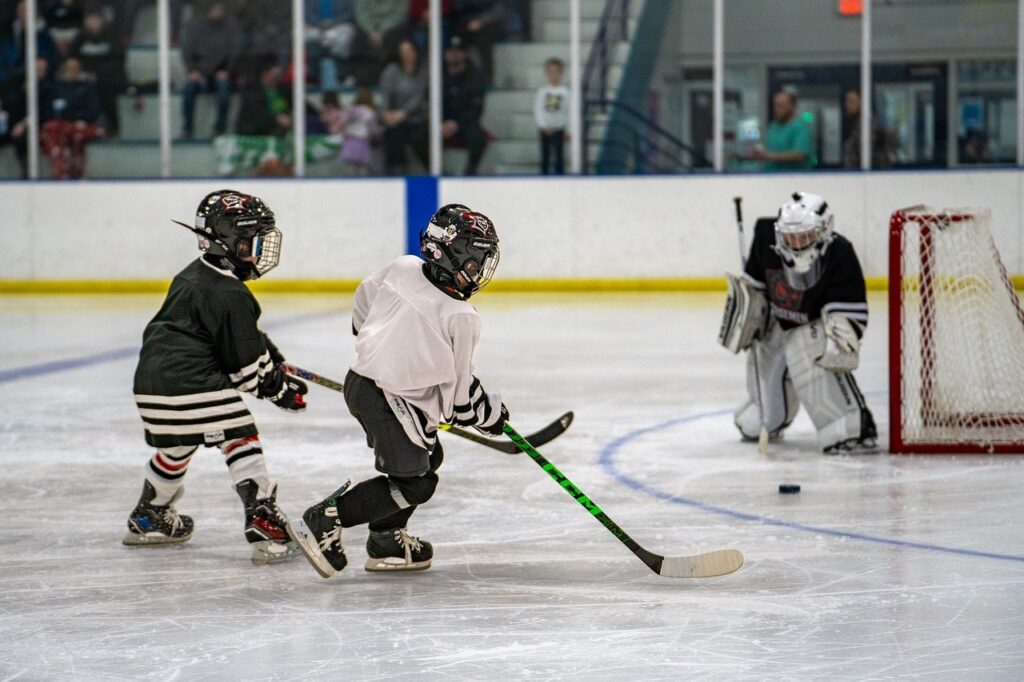
In ice hockey, a power play occurs when one team has more players on the ice due to an opponent’s penalty. Power plays are a critical aspect of a team’s offensive strategy and can be the difference between a win and a loss. A successful power play requires precision, quick decision-making, and teamwork. Here’s how to execute a power play effectively and make the most of your team’s man-advantage.
1. Set Up the Power Play Formation
The first step to a successful power play is setting up a solid formation. There are several types of formations used on the power play, with the most common being the umbrella and the 1-3-1. Both formations have specific roles for players that create passing lanes, open shooting opportunities, and confuse the opposing penalty kill.
- Umbrella Formation: This formation features one player at the top of the offensive zone (usually the point), two players on the half-wall, and one in front of the net. The point player distributes the puck, while the half-wall players look for shooting lanes or pass options.
- 1-3-1 Formation: In this formation, one player is at the top of the zone, three across the middle (usually at the half-wall and low slot), and one in front of the net. This creates more options for passing and allows for quicker puck movement, while the player in front of the net can screen the goalie.
The key is to move the puck quickly and keep the penalty killers on the move, which opens up shooting lanes and passing options.
2. Move the Puck Quickly
One of the most important aspects of a power play is puck movement. The more you move the puck around, the more difficult it is for the penalty killers to stay in position. Quick passes and fast decisions force the defense to shift, and this opens up space for a shot.
The power play should always be patient, but not stagnant. A good power play moves the puck around to create passing lanes, open up the defense, and take advantage of the extra player on the ice. Slow, deliberate puck movement gives the penalty kill time to adjust and close gaps, making it harder to score.
3. Get Traffic in Front of the Net
A common saying in hockey is, “You can’t score if you can’t see the puck,” and this is especially true on the power play. One of the best ways to take advantage of a power play is to have a player in front of the goalie screening their vision. A screen makes it much more difficult for the goalie to see shots, which increases the chances of scoring on shots from the point.
Another advantage of having a player in front of the net is the potential for rebounds. When a shot is taken, the goalie might make the initial save but could leave a rebound. Having a player nearby to pounce on those rebounds is a crucial part of any power play strategy.
4. Take Advantage of the Extra Man
While the power play is a man-up situation, it’s easy to get too focused on just getting a shot off. The real advantage lies in using the extra man to create multiple opportunities. The extra player gives you more passing lanes and the ability to cycle the puck more effectively.
Work to create two-on-one situations, where one offensive player can pass to a teammate while the other keeps the defender occupied. In this situation, the goalie often has to choose between two options, which can lead to easy goals.
A successful power play also involves shooting the puck quickly when a good opportunity arises. Don’t hesitate; the more shots you take, the better the chance of scoring.
5. Be Ready to Adapt to the Penalty Kill’s Strategy
Penalty kills aren’t static, and teams will adjust based on how successful the power play is. If a team is shutting down shots on the outside, you may need to adjust by moving the puck to better shooting areas or trying a different formation to break down their structure.
For example, if the penalty kill is aggressive and pressuring the puck carrier, it may open up more passing lanes or opportunities to pass the puck behind the net to create better angles for shooting. Be aware of how the penalty killers are playing and be ready to change tactics mid-play.
6. Have a Set Play for the Faceoff
Faceoffs in the offensive zone, especially during a power play, are crucial moments. Winning the faceoff gives you immediate control of the puck and an opportunity to set up your power play. It’s important to have a set play for faceoff situations, whether it’s a quick shot off the draw or a quick pass to a teammate to start the power play.
Good teams have pre-planned faceoff plays that they’ve practiced, so they know exactly where to position themselves and what to do once they win the draw. Having a plan ensures that you don’t waste valuable time, especially if the opponent wins the faceoff and clears the puck down the ice.
7. Practice, Practice, Practice
Like any skill in hockey, executing a successful power play comes down to practice. Teams should spend time in practice working on power play setups, puck movement, and shooting under pressure. Players should be familiar with their specific roles, such as what to do with the puck once they receive it and where to be when the puck moves.
The more practice time spent on the power play, the more fluid it becomes during games. This can be the difference between converting a man advantage into a goal or letting it slip away.