
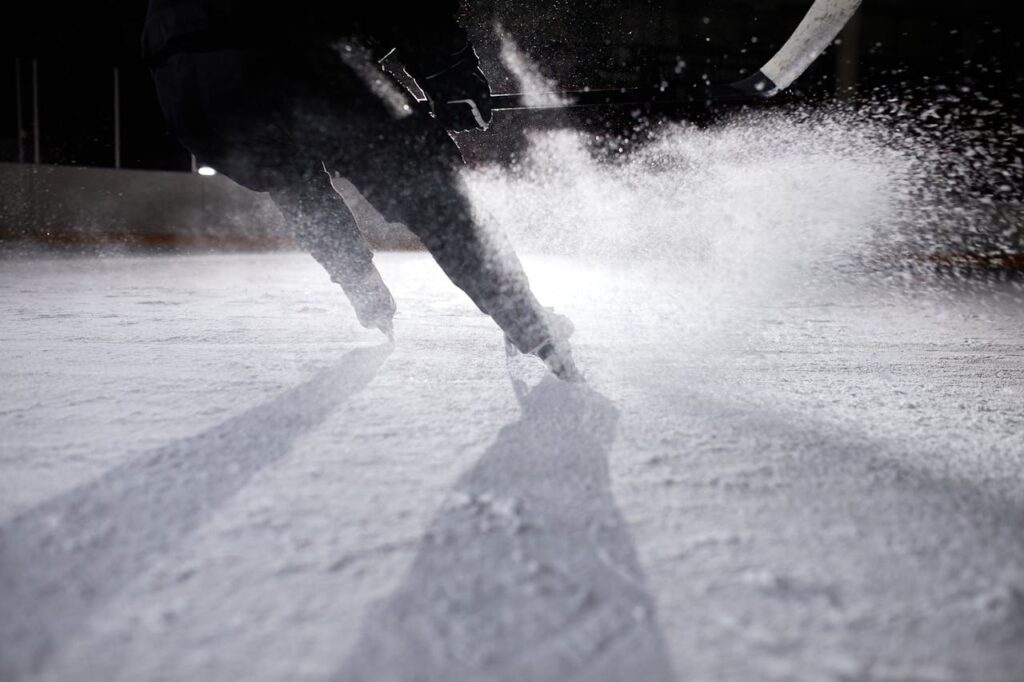
Skating is the foundation of hockey, and improving your skating speed can significantly elevate your game. Whether you’re on a breakaway, closing the gap on an opponent, or quickly transitioning between offense and defense, the faster you skate, the more effective you’ll be. This article will break down techniques, drills, and tips to help improve your skating speed on the ice.
1. Focus on Proper Form
Before adding speed, make sure your skating form is correct. Bad posture or inefficient technique will slow you down. To skate faster, focus on maintaining a low, balanced stance. Bend your knees deeply and keep your weight centered over your skates. Your upper body should remain relaxed and slightly forward, with your arms working in sync with your legs to propel you forward.
Your stride should be long and powerful. The deeper your push, the more speed you’ll generate. Ensure you’re gliding on the outside edge of your skates to get the maximum power from each push. Skating with a wider stance can also help create more balance and stability while maintaining speed.
2. Build Leg Strength and Endurance
Speed starts from the legs. To improve your skating power, focus on building strength and endurance in your quads, hamstrings, glutes, and calves. Stronger legs allow you to push off harder and recover faster between strides.
Include exercises like squats, lunges, and leg presses in your training routine. Plyometric exercises—such as box jumps, sprints, and explosive jumps—can also help improve the power and explosiveness in your stride.
Endurance is just as important as strength. Skating for extended periods without tiring will help maintain your speed throughout the game. Incorporate interval training and skating-specific conditioning drills to build your overall endurance.
3. Improve Your Stride Technique
A powerful stride is a combination of the right leg push and the glide. Start by focusing on lengthening your stride. Push off from the inside edge of one skate and extend your leg behind you, reaching as far as possible. The more you can extend each stride, the less you’ll have to take to get across the ice.
Focus on recovery as well. After each push, bring your skate back under your body quickly. This will help you generate a faster and more efficient second push. To build a quicker stride, practice double-push drills. These involve pushing with both legs simultaneously before gliding, which helps increase stride frequency and power.
4. Work on Quick Starts and Acceleration
Being able to accelerate quickly is just as important as skating fast once you’re moving. Quick starts and acceleration are key in hockey situations like breakaways, winning faceoffs, or closing down opponents on defense.
To improve your acceleration, practice skating short sprints with a focus on getting your first couple of strides as quick and explosive as possible. Start from a standing position, and explode out of the starting blocks by using the full range of motion in your legs. You should be driving off the ice with as much force as possible during those first few pushes.
Another drill to enhance acceleration is the standing start. Skate from a complete stop to top speed over a short distance. Work on using the first few strides to accelerate quickly and get to full speed faster.
5. Increase Your Agility on the Ice
Skating speed isn’t just about going straight. In hockey, you need to be able to change directions quickly and maintain control of your body while skating at top speed. Agility drills help you get faster, but also more controlled in tight turns, pivots, and crossovers.
Drills that involve sharp turns, lateral movements, and quick stops can help improve your agility. Practice skating in circles or weaving around cones to improve both your speed and ability to maneuver quickly.
6. Strengthen Your Core
A strong core is essential for skating speed, as it helps you maintain posture and balance while performing quick movements. Your core muscles—abs, lower back, and obliques—work together to help stabilize your body while you skate.
Incorporate core exercises such as planks, Russian twists, and leg raises into your off-ice workout routine. A strong core helps you maintain control during fast directional changes, and it prevents injury while skating at high speeds.
7. Incorporate Plyometric Training
Plyometric training is excellent for developing the explosive power needed for faster skating. These exercises improve the strength and speed of your legs and help with your quickness on the ice. Some great plyometric drills include bounding, skater jumps, and lateral hops. These exercises mimic the explosive movements used in hockey and will help increase your speed on the ice.