
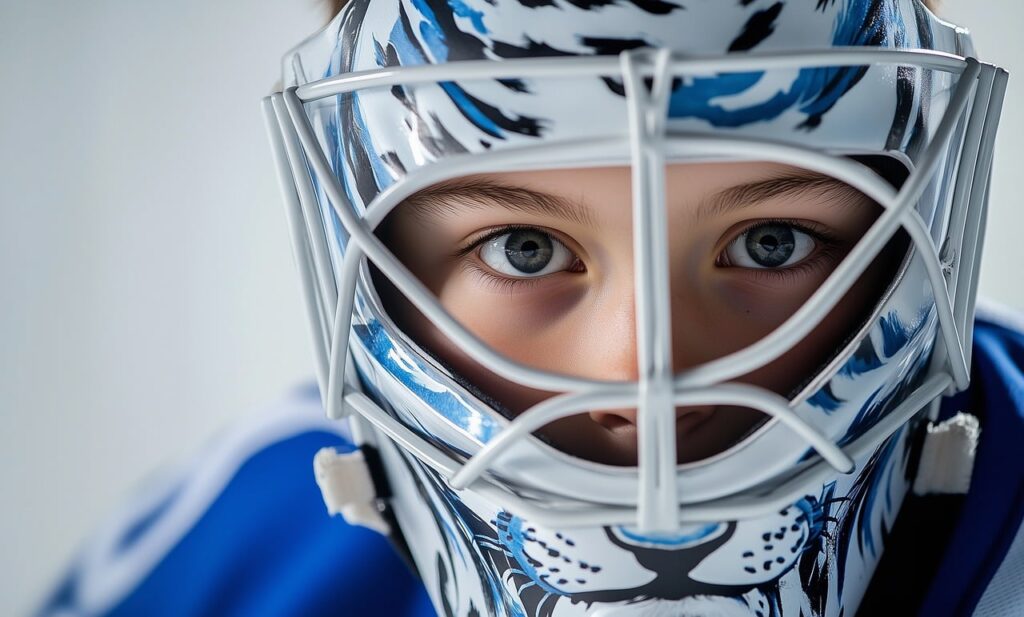
While skaters are often the stars of the game, goaltenders are the backbone of any hockey team. A great goaltender can change the course of a game, and in many cases, the outcome of a season. But being a goaltender is much more than just stopping pucks—it’s about strategy, positioning, and leadership on the ice. In this article, we’ll break down the critical role goaltenders play in a hockey game and what makes them essential to a team’s success.
1. The Mental Game of Goaltending
A goalie’s mindset is one of their most important attributes. They have to stay mentally sharp throughout the game, even when the puck is at the other end of the rink. When the puck does come to them, they have to react in split seconds, often under intense pressure.
Good goaltenders must be resilient—able to forget goals that get past them and move on quickly. The ability to stay calm under pressure is critical, as a goaltender is often the last line of defense, and a single mistake can cost a team the game.
Goaltenders also need excellent focus. They need to track the puck, anticipate plays, and read the game while managing their emotions, especially in high-pressure situations like penalty kills or during overtime.
2. Positioning: The Key to Efficient Saves
Positioning is the cornerstone of great goaltending. The most technically sound goalie is one who is always in the right place at the right time, which is achieved through constant awareness of both the puck and the play unfolding in front of them.
A well-positioned goalie takes away much of the net for shooters. Being square to the shooter—meaning the goalie’s body is lined up with the shot—is crucial for making saves. Whether it’s a wrist shot from the slot or a slap shot from the blue line, being in the right spot allows the goalie to make saves with minimal effort.
A goalie also needs to understand angles. Instead of relying solely on reflexes, they have to know when to come out of the crease and cut down the angle on the shooter. Good goaltenders adjust their positioning based on the situation, whether that’s playing deeper in the crease for a screened shot or moving out to challenge a breakaway.
3. The Butterfly Effect: Modern Goaltending Techniques
The butterfly style has become the standard technique for modern goaltenders. This style involves dropping to the ice and covering the lower part of the net with the legs while keeping the upper body open to track and stop the puck.
While the butterfly technique is incredibly effective in covering the lower part of the net, goalies still need to be agile enough to move side to side. Strong lateral movements, known as “lateral pushes,” are necessary for covering the entire crease efficiently, especially on one-timers or cross-crease passes.
A goaltender must also master quick recovery techniques. After making a save, they need to get back into position quickly to prevent rebound goals. Whether it’s pushing off the post or using the stick to propel themselves back into the play, recovery speed can be the difference between making a save or conceding a goal.
4. Communication and Leadership
A goaltender’s role extends beyond making saves; they’re also leaders on the ice. Goalies must communicate effectively with their defensemen, calling out when the puck is in a dangerous area or when there’s an opportunity to clear the puck.
Goalies also need to be vocal in directing traffic. They can see the play developing from a unique perspective and should be able to direct their defensemen to cover open players or block shooting lanes. A goalie who is loud and clear with their directions will help ensure defensive consistency.
Another aspect of leadership is staying mentally tough. In times of adversity—whether a tough opponent, a bad goal allowed, or a penalty kill—the goalie must be a steady presence, giving the team confidence even in difficult situations.
5. Handling the Puck: More Than Just Stopping Shots
Modern goalies are expected to do more than just stop the puck—they’re also expected to handle it. Whether it’s playing the puck behind the net to start a breakout or making a quick pass to a teammate to create an offensive opportunity, the goalie’s ability to handle the puck is a key skill in today’s game.
While not every goalie needs to be a great puck handler, many of the top netminders are adept at playing the puck to assist with zone exits and start offensive plays. Goalies can also help kill time by playing the puck to prevent opposing forwards from pressuring their defensemen.
6. The Physical Toll of Goaltending
Goaltending is one of the most physically demanding positions in all of sports. Goalies endure repeated stress on their bodies with each game. The constant squatting, lateral movements, and sudden dives put a strain on their knees, hips, and back.
Goalies also face high-impact collisions, whether from a hard shot or a player crashing into the crease. Many top goalies incorporate regular flexibility and strength training into their routines to help prevent injuries and maintain peak physical condition throughout the season.
Regular treatment, including massage therapy and ice baths, is also a key part of a goaltender’s recovery routine to manage soreness and keep their body in top shape.
Conclusion:
The role of the goaltender is multifaceted—it’s not just about making saves. A great goalie requires mental toughness, strong positioning, quick reflexes, leadership, and puck-handling skills. Without a reliable netminder, even the most talented teams can struggle. As the last line of defense, goaltenders need to be prepared for anything, and their performance can determine the success or failure of a team.